Mobile Disrupt 2026: Circular Economy Industry Trends
Our Honest Take On Why Live Selling Is Here To Stay
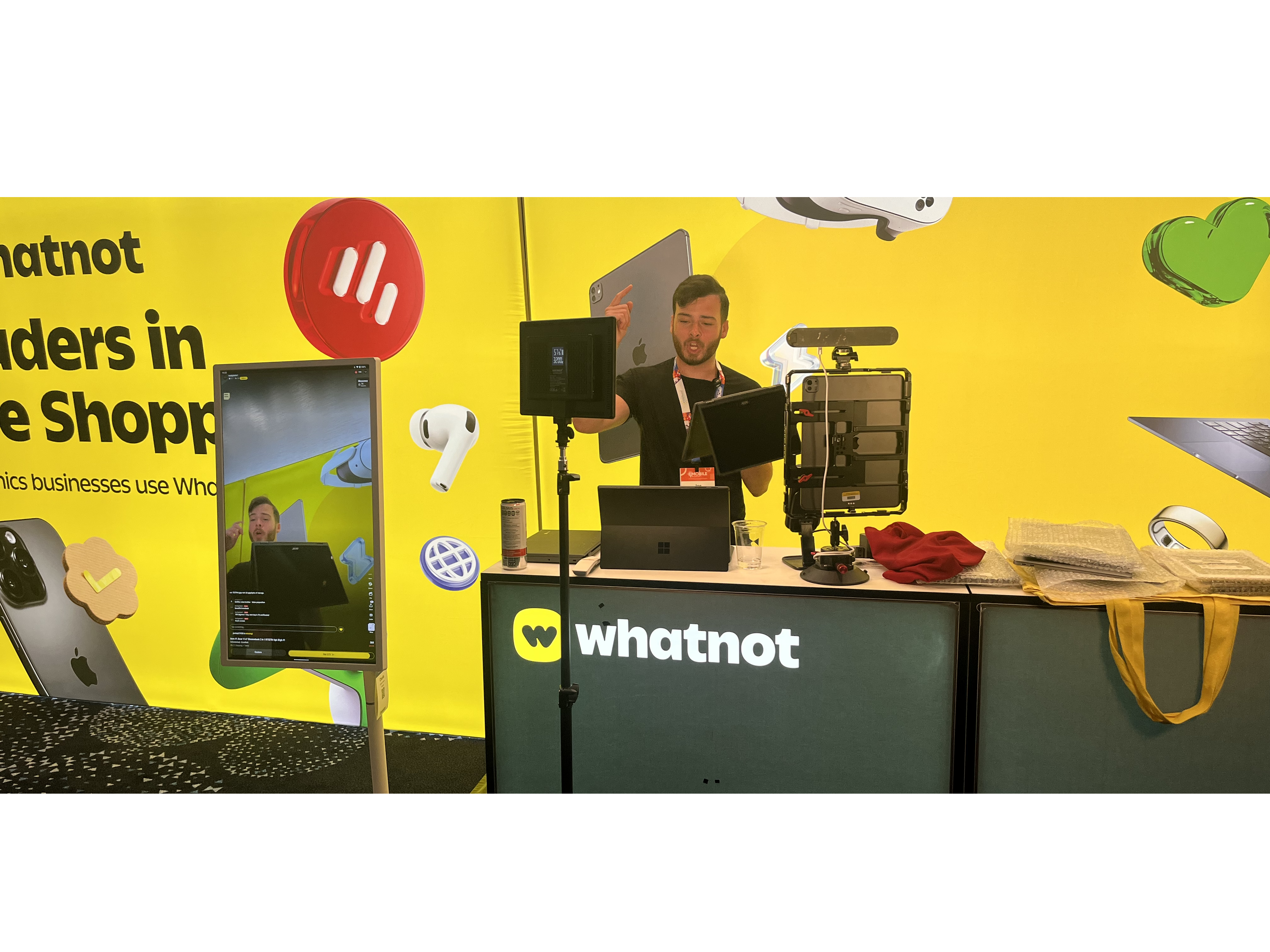
Cellbie exhibited at last week's annual Mobile Disrupt in Miami Beach — one of the most regarded secondary market events. Data, AI & Robotics, Reverse Logistics improvements, cryptocurrency payments, and Live Selling were among the hottest topics on the floor and on the conference stage. We had the chance to witness Live selling through Whatnot and eBay's booths at the show. Both ran multiple sessions, with tech influencers activating thousands of followers and transacting hundreds of phones, tablets, and laptops. While doubtful at first of the return on the investment, transaction prices proved us wrong — for working devices, and especially for broken ones. Several iPhones and MacBooks with faulty cameras, Face IDs, or a single tiny dead pixel on the screen went out for 30 to 50% of working-condition prices.
Live selling, or video commerce started with collectibles and quickly expanded into sneakers, fashion, and beauty. While fashion still dominates all categories, eBay, Whatnot and Tiktok Shop have been scaling consumer electronics, and the secondary market. Targeting a younger, hyperconnected and deal-hungry segment, those platforms reach millions of users and generate billions of dollars in transactions. When a streamer demonstrates and sells a product on camera while viewers watch and can bid in real time, they educate their audience about the product, the policies and even reply to any concern. Cosmetic grading disputes cause more friction in this industry than anything else: live selling solves the issue at its core for used items. The host can test the product live, read specifications aloud from the box or the screen, show any imperfections and provide 360-views that the best 2-D or 3-D website pages cannot display.
Home shopping television proved this decades ago. QVC and HSN put a host on camera holding the product, demonstrating it, taking calls from viewers who had questions before they bought. The same experience now runs on a phone, open to any seller with an audience. As a result, trusted eCommerce vendors like USMP or YY Wireless move 200 devices in 3-hour long streaming sessions.
Excelling at live selling takes real preparation. YY Wireless spent four months building a following past 27,000 before its shows reached their current pace. They adopted a trial-and-error approach to set up the right price expectations: starting low increases the buyer funnel size, which should drive competitive pricing. However, in 20 seconds, you might not reach your floor price. Then, finding the right host matters most. A good one possesses deep product knowledge to answer viewers concerns without slowing the show down. Lighting and camera quality carry real weight, since the format depends on buyers seeing the advertised items clearly. And finally, shipping the exact inventory to the correct customers implies direct-to-consumer, IMEI-level systems.
What does this mean for Cellbie and its marketplace?
Since its inception, our founders have always believed in data transparency as the fairest business enabler. In a sense, Live Selling becomes the perfect platform to educate potential buyers and tackles the grading understanding gaps like no other tools or solutions. At Cellbie, we thrive at finding an economically suitable home for lower-end device grades, including repairable smartphones and tablets; sellers net up to 50% higher recovery than traditional liquidation channels. Whatnot, eBay and Tiktok Shop venturing into that space can only increase these returns thanks to more competition. Reuse will gain more visibility and if anything, sourcing on Cellbie can become a viable option for Live Selling vendors. Plus, the live viewers belong to consumer segments our marketplace doesn’t target.
One open question worth watching: is Live Selling going to spread across B2B transactions? Imagine a future where sellers may decide to go beyond sharing IMEI manifests with grading and functional test results; they will take a camera, stream their phone batch quality, answer buyers' questions–synchronously or live, and auction the devices.
Ready to source or sell broken devices in bulk? Join Cellbie by reaching contact@cellbie.com